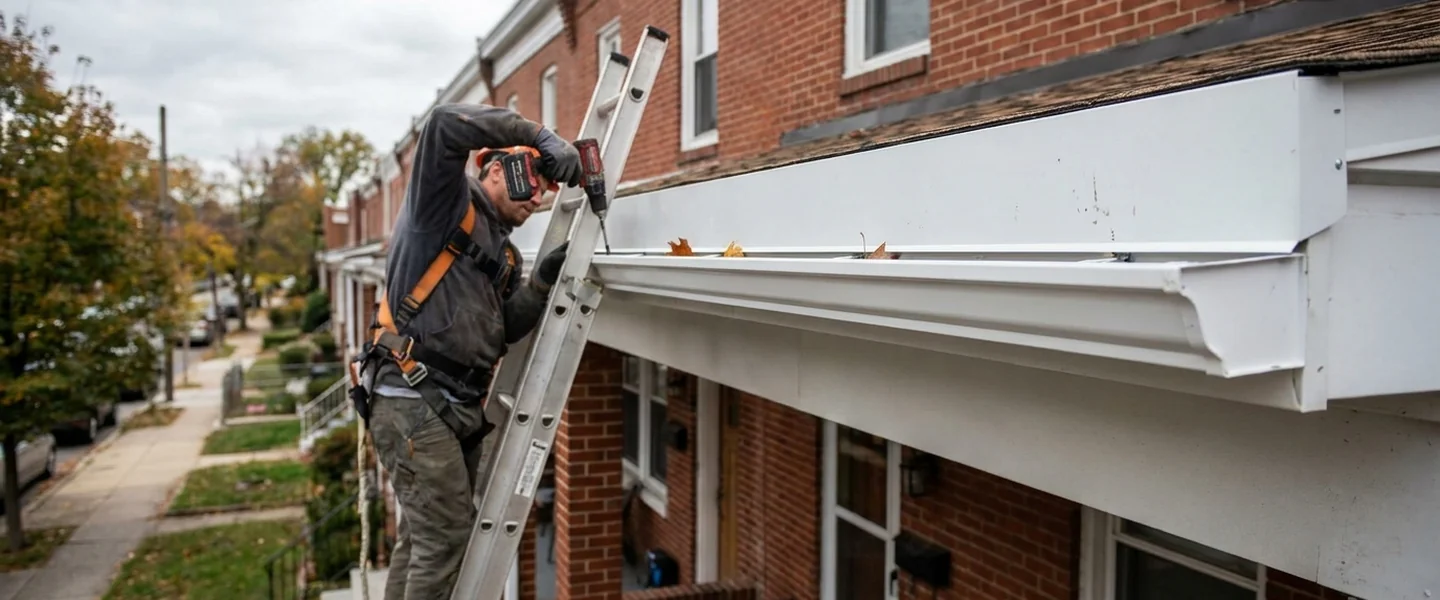
Fascia & Soffit Repair in Baltimore, MD
Baltimore's humidity, carpenter bees, and failing gutter systems combine to rot fascia and soffit boards on thousands of local homes. We repair and replace rotted wood before installing new gutters — the right way.
Call (443) 339-6431 — Free EstimateWhy Baltimore Homes Have Rotted Fascia
Fascia boards — the horizontal boards that run along the roofline and provide the mounting surface for gutters — are among the most consistently neglected structural elements on Baltimore homes. On properties built between the 1940s and 1970s, which make up the majority of the housing stock in Dundalk, Catonsville, Parkville, and similar neighborhoods, these original boards may be 50 to 80 years old. Even under ideal conditions, wood in a high-moisture environment has a finite lifespan. Baltimore's conditions are far from ideal.
The combination of factors that destroys fascia in Baltimore is specific and relentless: elevated ambient humidity from the Chesapeake Bay climate, frequent wetting from rainfall and winter ice, the sustained moisture from failing or clogged gutters that allows water to run along the fascia face rather than discharging cleanly, and the biological activity of carpenter bees, woodpeckers, and fungi. When one or more of these factors has been operating for years on original 1950s pine fascia boards, replacement is typically the only sound option.
How Failing Gutters Cause Fascia Rot
The most common pathway from healthy fascia to rotten fascia goes through a failing gutter system. When gutter seams fail — which happens steadily on sectional aluminum and galvanized steel systems over Baltimore winters — water that should drain to the downspout instead runs along the back of the gutter channel, collecting at the seal between the gutter back and the fascia face. This water migrates into the wood, which holds it in sustained contact with the fascia fiber. The paint or sealer that originally protected the fascia from moisture was likely applied before the gutter was installed and doesn't extend behind the gutter where this moisture is collecting.
Clogged gutters compound this. When a gutter is full of debris and water is overflowing the front lip, it's also running over the back edge and saturating the fascia. Homeowners who can see water overflowing the front of their gutters during rain events are also getting sustained fascia saturation at the back that may not be visible from the ground.
Carpenter Bee Damage on Baltimore Fascia
Carpenter bees are a significant and often underestimated source of fascia damage on Baltimore homes. These large, solitary bees — often mistaken for bumblebees — excavate perfectly circular nesting holes in unpainted or weathered softwood, with fascia boards being a preferred target. A single breeding season can produce multiple tunnels, and returning bees expand the same tunnels year after year. Nesting tunnels create entry points for moisture, weaken the structural fiber of the board, and attract woodpeckers who excavate further to reach the larvae.
Carpenter bee damage is extremely common on the original fascia boards of 1950s and 1960s Baltimore homes, where decades of paint weathering have left bare or minimally protected wood surfaces. The damage isn't always visible from the ground — it takes a close inspection from the roofline to assess the full extent of tunnel excavation and whether individual boards need repair or replacement.
Soffit Damage and Ventilation
Soffits — the material that covers the underside of the roof overhang — serve both structural and ventilation purposes. Vented soffits allow air circulation into the attic space, which is essential for managing moisture and preventing the attic overheating that leads to ice dam formation in winter. When soffits rot or are compromised, several problems compound: visual deterioration, pest entry points (birds and squirrels readily exploit even small openings in rotted soffit), loss of ventilation, and in some cases, structural compromise at the rafter tail ends.
Baltimore's humidity is particularly hard on wood soffits, especially on the north-facing sides of homes where they receive less sun to dry out between rain events. Vinyl or aluminum soffit replacement is now standard practice — these materials don't rot, don't attract carpenter bees, and require no painting. We replace wood soffits with pre-finished aluminum or vinyl that matches the home's color profile and restores the original vented area.
PVC and Composite Fascia Replacement
When we replace rotted fascia boards, we no longer install wood as a standard recommendation. PVC trim board is now our preferred material for fascia replacement — it's dimensionally stable, impervious to moisture and rot, doesn't attract carpenter bees, and takes paint well if the homeowner wants to paint it. PVC fascia in a pre-finished white or matching color eliminates the maintenance cycle of periodic repainting and dramatically outlasts wood in Baltimore's climate.
For homeowners with historic district restrictions that require wood materials, we use pressure-treated hardwood or cedar with appropriate sealing, installed correctly to maximize moisture resistance. We document the material choice in the written estimate so there are no surprises.
The Proper Sequence: Repair Fascia Before Installing Gutters
A gutter can only be as solid as its mounting surface. Installing new gutters on rotted fascia is one of the most common mistakes in the gutter industry — it produces a system that looks correct initially but fails within months to a few years as the hangers pull through the soft wood. We refuse to hang gutters on compromised fascia.
Our process: during the free estimate, we probe the fascia along every gutter run for signs of softness or delamination. Any compromised sections are marked and included in the written estimate for repair or replacement. The wood work is completed before the gutter hangers go in. Every hanger is driven into solid material — into the structural rafter tail where possible, or into a sound section of fascia at minimum. You get a finished installation that is mechanically sound and will hold its position through Baltimore's worst winters.
Frequently Asked Questions
Look for paint bubbling or peeling on the fascia face, dark discoloration or staining, gutters sagging or pulling away from the roofline, or visible softness when you press on the board. From the ground, a gutter that's visibly separating from the fascia at its back edge is a strong indicator of rot underneath.
We repair or replace only what's actually damaged. Sound fascia sections are kept in place. We don't recommend replacing more wood than necessary — the estimate identifies specific compromised sections and prices them individually.
Yes — we inspect and can repair or replace both fascia and soffit as part of the same project. Doing both at once is more cost-effective than separate mobilizations, and it makes sense to address all the wood before new gutters go up.
A typical single-family home with spot fascia replacement can usually be completed in a day. Extensive replacement on all four elevations, combined with gutter installation, may take two days. We'll provide a timeline in the written estimate.
Rotten Fascia Behind Your Gutters? We'll Fix It Right.
Call Baltimore Gutter Experts for a free inspection. We'll assess your fascia and soffit condition, give you a written estimate for any needed work, and ensure your new gutters have a solid, lasting mount.
Call (443) 339-6431 — Free Estimate